

Exchanges in Brussels highlighted visible interest in collaboration and peer learning among local and regional authorities. Their messages identified practical barriers to adaptation. Local entities face fragmented data and limited budgets all the way to public engagement and political commitment.
Enhancing local and regional adaptation experiences and knowledge is the main objective of R+ and stood out in its engagement during the European Week of Regions and Cities and the EU Covenant of Mayors Ceremony this October in Brussels.
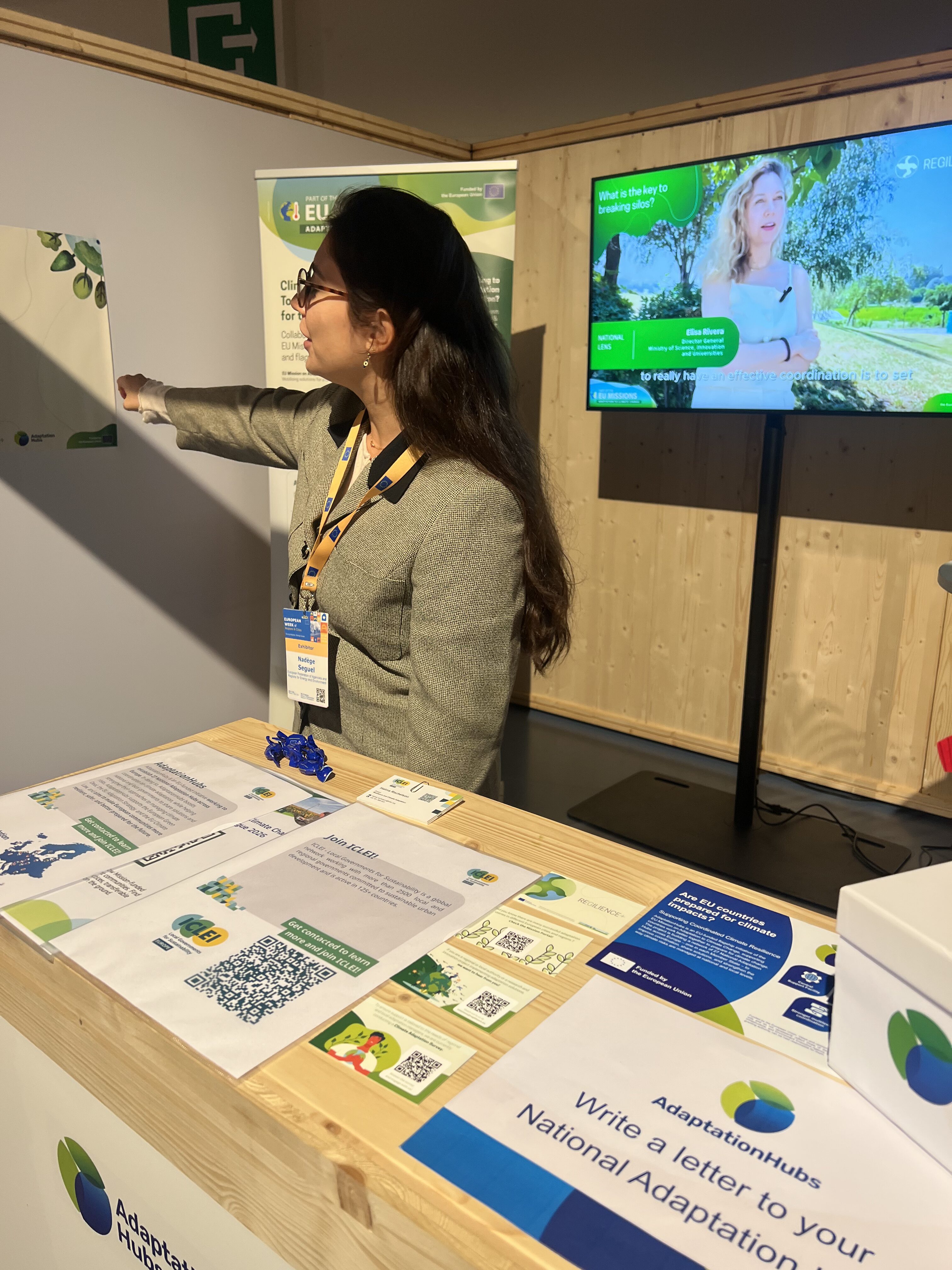
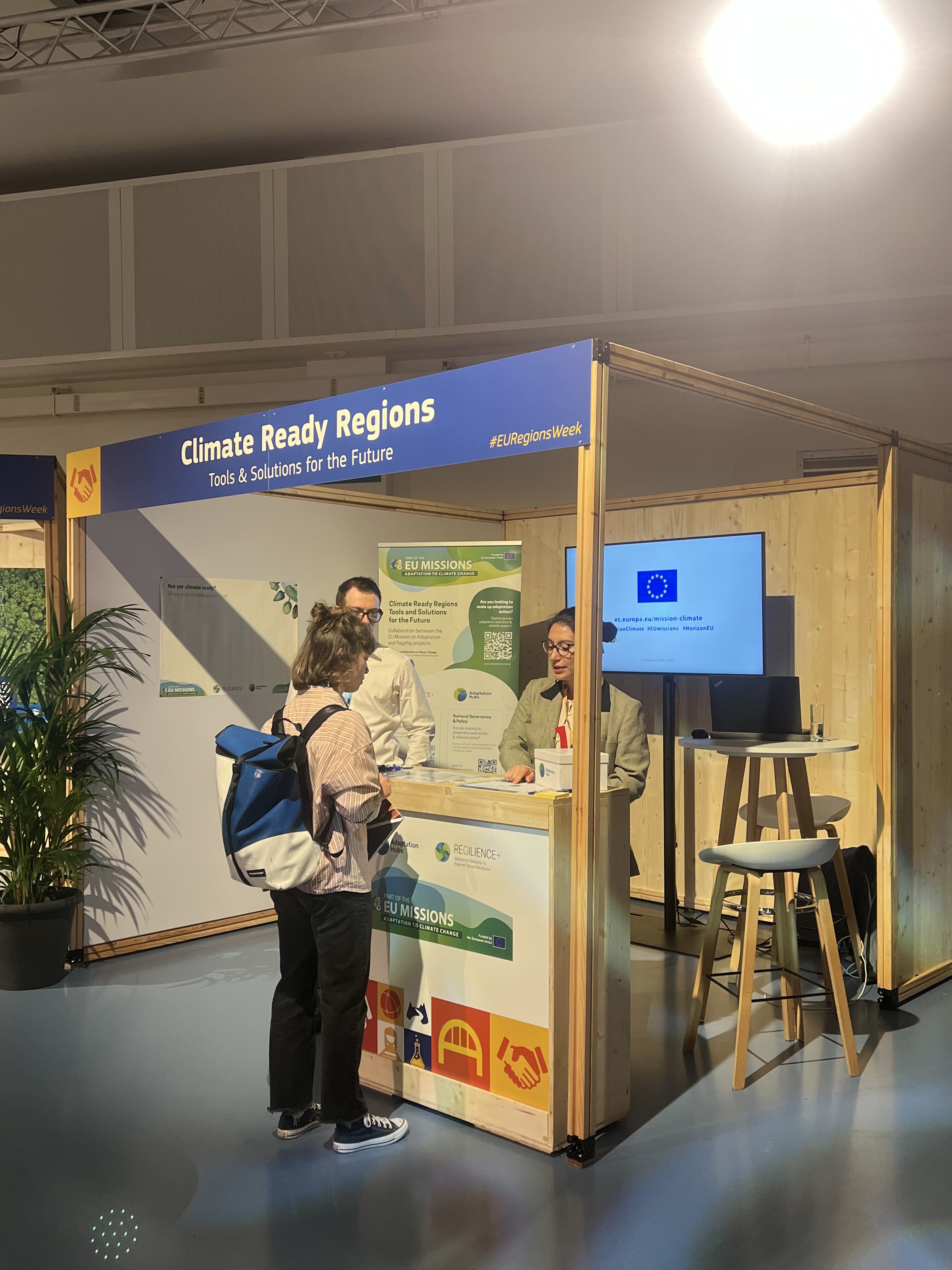
On 14 October, AdaptationHubs, REGILIENCE+ and the Mission Implementation Platform for Adaptation to Climate Change (MIP4Adapt) co-hosted the stand “Climate Ready Regions: Tools & Solutions for the Future”. At the packed event, local and regional representatives shared adaptation challenges and experiences, explored resources and discussed opportunities for cooperation.
The exchanges revealed an appetite for working together, while offering a direct view of the local obstacles faced when translating adaptation ambitions into action.
What local and regional representatives shared and what R+ can learn
Through LRAs’ feedback in an interactive activity together with Adaptation Hubs project, participants brought their concerns into the discussion about European and national adaptation support. The contributions below reflect individual representatives’ perspectives, rather than assessments of each country as a whole.
A representative from Hungary described a combination of constraints: “Missing information, budget and sometimes motivation.” Access to knowledge, financial resources and the capacity to sustain action can be closely connected.
From the Netherlands, a participant highlighted the challenge of “getting the people involved in the climate change adaptation.” Resilience progress is inherently socially driven; it depends on engaging people in understanding risks and shaping responses.
A contribution from Bulgaria identified “data fragmentation”; without accessible and usable information across institutions, decisionmakers will not have what they need to plan and implement adaptation measures.
From Sweden, “weak multi-level governance structures” was a gap identified, highlighting the need for effective connections between local, regional and national authorities, alongside clear responsibilities and channels for cooperation.
A participant from Spain highlighted “Water scarcity adaptation in rural areas” and the need to “Adapt social and tech to protect forest.” These concerns bring attention to the specific challenges facing rural territories and the importance of combining social and technological approaches.
An anonymous comment expressed frustration with political engagement towards climate challenges, conveying a perceived gap between recognition of worsening climate risks and policy makers’ willingness to respond. A contribution from Austria similarly highlighted “lack of political commitment (at the national level)”.
What local and regional representatives shared and what R+ can learn
The EU Covenant of Mayors Ceremony on 15 October continued this local focus under the theme “Local Leaders for Affordable Energy and Climate Resilience”, highlighting municipalities’ role in translating European climate and energy ambitions into action.
The ceremony and climate adaptation thematic networking hub also offered opportunities to showcase work within the EU Mission on Adaptation to Climate Change. Pathways2Resilience and UNDERPIN Climate were additionally present, while Miljenko Sedlar, AdaptationHubs‘ project coordinator, shared insights from AdaptationHubs and its focus on governance across levels.
For AdaptationHubs, these exchanges reinforce the importance of connecting local experience, national support and European opportunities. The interest in collaboration and peer learning provides a foundation for continued engagement, guided by the challenges that local and regional representatives themselves identify.
Thank you to everyone who visited the stand and thematic networking hub to share experiences, ask questions and explore cooperation.